
Setting Up Your First Marketing Automation Workflow: A Non-Technical Implementation Guide
Step-by-step guide to implementing your first marketing automation workflow—no coding required. Perfect for teams new to automation platforms.


Listen to summary
0:00 audio overview
Setting Up Your First Marketing Automation Workflow: A Non-Technical Implementation Guide
Here is something that surprises most teams when they start their marketing automation setup: the hardest part has nothing to do with the software.
Think about it like building a house. You can have the best tools on the job site. But if you skip the blueprint, you will spend weeks fixing walls that should have been planned correctly from the start. Marketing automation works the same way. The platform is just the tool. The plan is what makes it work.
This guide walks you through how to set up your first workflow the right way. Not the fastest way. The right way. That means starting with strategy, getting your data clean, aligning your team, and only then touching the platform.
No coding required. No technical background needed. Just clear thinking and a willingness to do the unglamorous work first.
Why Most First Workflows Fail
Nearly half of organizations say data quality problems stop them from getting real value out of their automation tools. More than half have no clear data strategy at all.
That is not a technology problem. It is a planning problem.
When teams struggle after buying a platform, the instinct is to blame the software. But in most cases, the platform is fine. What is missing is a clear strategy, clean data, and agreement between teams on what the automation is actually supposed to do.
The good news: all of that is fixable. And you do not need a developer to fix it.
Step 1: Decide What Problem You Are Actually Solving
Before you open your automation platform, answer this question clearly: what is the single most valuable thing you could automate for your most important customers right now?
Not "everything." One thing.
This sounds simple. It rarely is. Most teams rush toward automation because leadership wants it, or because a competitor seems to be using it. The automation becomes the goal instead of the means to a goal.
A better approach: pick one specific problem, for one specific group of customers, and solve that problem well.
Ask yourself three questions before you move forward.
What specific problem does this workflow solve, and for whom? Be as specific as possible. "Nurture leads" is not specific enough. "Follow up with prospects who visited our pricing page but did not request a demo" is specific.
What does success look like, and how will you measure it? Agree on this before you build anything. Measurement decisions made after the fact are almost always compromised.
What data do you need, and is it clean? This question will save you weeks of frustration. We will come back to it in a moment.
If you can answer all three clearly, you are ready to move forward. If you cannot, keep working on the strategy until you can.
Step 2: Clean Your Data Before You Build Anything
This is the step most guides skip. It is also the step that most directly predicts whether your marketing automation setup will succeed or fail.
Automating on top of bad data does not improve your results. It makes your mistakes happen faster and at greater scale.
Before you build your first workflow, do a quick audit of your contact database. Look for four common problems.
Duplicate records. The same contact appearing twice means that person gets double the emails and you get half the signal from their behavior. Clean them up.
Stale records. Contacts who have not engaged in a year or more are unlikely to engage now. Suppressing or removing them improves your deliverability and your metrics.
Incomplete information. Contacts missing key fields like company size, role, or industry cannot be segmented properly. Decide which fields matter most for your workflow and make a plan to fill the gaps.
Inconsistent segmentation. If "customer" means three different things depending on who entered the record, your targeting will be off. Standardize your definitions before you start.
Data cleanup is not exciting. But it is the most important thing you can do before your first marketing automation setup. Think of it as clearing the ground before you pour the foundation.
Step 3: Align Marketing and Sales Before You Build
This is the invisible step that almost every implementation guide skips. It is also one of the most common reasons first workflows fail.
If marketing and sales do not agree on what a qualified lead looks like, no amount of automation will fix that. Automation will just surface the disagreement faster.
Have one focused conversation with marketing and sales leadership before you start building. Get written agreement on three things.
Who are you trying to reach? Define your target audience precisely. Job title, company size, industry, behavior, whatever matters most for your business.
What does a qualified lead look like coming out of this workflow? If sales is expecting warm, purchase-ready prospects and marketing is sending early-stage contacts, both teams will be frustrated.
What counts as success? Pick two or three metrics that both teams agree matter. Track those metrics from day one.
This conversation can feel uncomfortable because it sometimes surfaces disagreements that have been quietly building for months. That is okay. Surface them now, before you build the workflow, not after it goes live.
Step 4: Choose the Right First Workflow
Here is a practical recommendation for your first marketing automation setup: do not start with a generic email nurture sequence.
Your competitors are already doing that. It is the default choice, not the best choice.
Instead, choose a workflow that addresses a real gap in your current customer experience. Two options tend to deliver strong early results.
A lead qualification workflow. Build a system that scores prospects based on actual buying signals, not just demographic data. A prospect who has visited your pricing page three times is different from a prospect who attended one webinar. Behavioral signals like page visits, content downloads, and email click-throughs are better indicators of purchase intent than job title alone. This workflow solves a specific problem that sales actually cares about: getting leads that are ready to talk.
A post-purchase onboarding workflow. Most teams focus entirely on acquiring new customers and ignore the customers they already have. A simple onboarding sequence that sends relevant guidance at key moments, right after sign-up, after first login, after a key action is completed, can meaningfully reduce early churn and increase how quickly customers see value. This is one of the highest-return workflows you can build.
Pick the one that solves the more urgent problem for your business. Build it well. Measure it. Then expand.
Step 5: Design Around Behavior, Not the Calendar
Most first-time workflows use time-based triggers. Send this email three days after sign-up. Send this follow-up one week after the last message.
Time-based triggers are easy to set up. They are also one of the weakest ways to trigger automation.
Customers do not move through a buying journey on your schedule. Some are ready to buy on day one. Others need three months of consideration. Sending everyone the same message on day three means most people get the wrong message at the wrong time.
Behavior-based triggers are more effective. A trigger like "prospect visited the pricing page" or "customer has not logged in for seven days" reflects what the customer is actually doing, not what the calendar says.
To use behavior-based triggers, you need two things. First, clear visibility into what customers are doing on your website and in your product. That means proper event tracking. Second, a solid integration between your marketing automation platform and your CRM so that behavioral data flows to the right place. If you are planning your first marketing automation setup and are not sure how to connect those systems cleanly, that is a good time to bring in help.
At House of MarTech, our integration work often starts exactly here. Getting data to flow correctly between your CRM and your automation platform is foundational. Everything else depends on it.
Step 6: Write for Humans, Not for Scale
Here is something easy to forget when you are building automated workflows: a real person is on the other end of every message you send.
The goal of marketing automation setup is not to send as many messages as possible. It is to send the right message to the right person at the right moment.
Automated messages that feel robotic hurt your brand. They get marked as spam, they get ignored, and they erode the trust you have worked to build.
The most effective automated messages are honest about what they are and genuinely useful to the person reading them. A message that says "you recently looked at our pricing page, here is what our customers typically ask at this stage" performs better than a message pretending to be personally written but offering nothing specific.
Before any message in your workflow goes live, ask yourself this: if I received this email, would I find it useful? Would it feel relevant to where I am right now?
If the answer is no, rewrite it. Better to send fewer, more relevant messages than to flood inboxes with content that does not earn attention.
Step 7: Build in Privacy From the Start
You do not want to retrofit privacy compliance into a workflow that is already live. That is a painful process.
Build explicit consent management into your workflow from day one. Be clear about what data you are collecting and why. Give contacts easy ways to update their preferences or opt out of specific message types without having to leave your list entirely.
This is not just about legal compliance. Customers who have actively opted into the types of messages you send are more engaged with those messages. They are less likely to mark them as spam. They are more likely to trust your brand.
Privacy handled well is a competitive advantage. Privacy handled poorly is a liability.
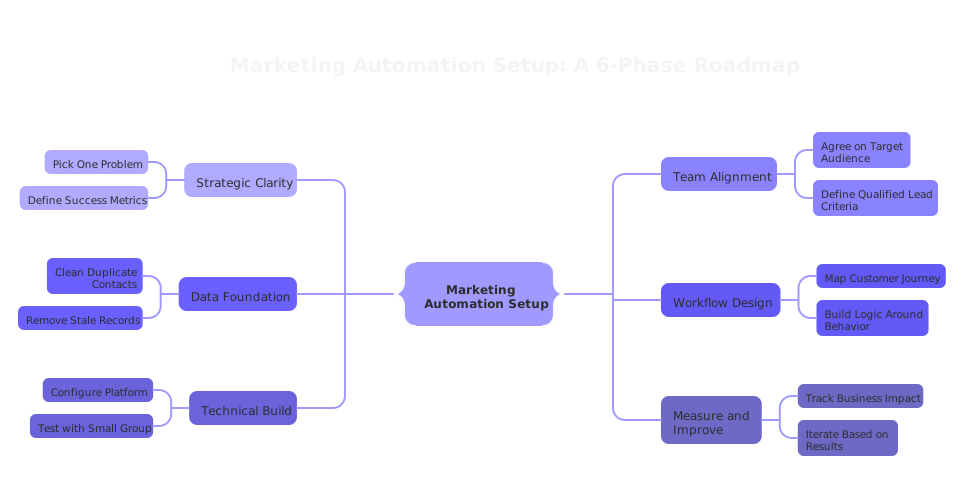
The Six-Phase Implementation Roadmap
Here is a clear sequence for your first marketing automation setup. Follow this order. Resist the urge to skip ahead to the platform.
Phase 1: Strategic Clarity (Week 1-2). Define the one workflow you will build. Answer the three core questions from Step 1 with specificity. Do not move forward until you have clear, written answers.
Phase 2: Alignment (Week 2-4). Align marketing and sales on audience definitions, lead qualification criteria, and success metrics. Secure clear ownership of the automation initiative internally.
Phase 3: Data Foundation (Week 4-8). Audit your database. Remove duplicates and stale records. Standardize your segmentation. This phase takes longer than most teams expect. That is normal.
Phase 4: Workflow Design (Week 8-10). Map the customer journey for your target segment. Identify the specific moments where automation adds value. Design your trigger logic around customer behavior. Decide which channels you will use.
Phase 5: Technical Build (Week 10-12). Now configure your platform. Build the workflow. Test it with a small group before a full rollout. Expect to find things to fix. That is what testing is for.
Phase 6: Measure and Improve (Week 12+). Track impact metrics, not just activity metrics. Leads generated, revenue influenced, retention rate. Share results with both marketing and sales. Iterate based on what you learn.
The Real Goal: Fewer Workflows, Done Well
The teams seeing the best returns from marketing automation are not the ones with the most complex systems. They are the ones with the clearest strategy, the cleanest data, and the most disciplined focus on solving specific problems well.
Start with one workflow. Optimize it until it performs well. Then expand.
That discipline is what separates a marketing automation setup that compounds over time from one that accumulates technical debt and underperforms.
If you want a second set of eyes on your strategy before you start building, or if you need help getting your CRM and automation platform to talk to each other properly, that is exactly what the team at House of MarTech does. Reach out when you are ready.
Related Articles
Need Help Implementing?
Get expert guidance on your MarTech strategy and implementation.
Get Free Audit