
Amazon DSP Power Shift Report
Amazon DSP shifts ad power from Google with first-party data, CTV, and AI tools. B2B leaders: evaluate intent signals and measurement for full-funnel ROI beyond search.


TL;DR
Quick Summary
Listen to summary
0:00 audio overview
Amazon DSP Power Shift Report
Quick Answer
Most brands treat Amazon as a checkout destination. Amazon is treating itself as a media company.
That distinction matters more than most marketing teams realize right now.
Amazon's Demand-Side Platform, known as Amazon DSP, is no longer a niche tool for e-commerce brands running retargeting ads. It is becoming a full-funnel advertising system backed by purchase intent data from over 300 million active shoppers, streaming inventory from Netflix, Roku, and Spotify, and AI-driven targeting that does not depend on third-party cookies.
That is a structural shift in where advertising power lives. And it is happening quietly, while most brands are still optimizing their Google Search campaigns.
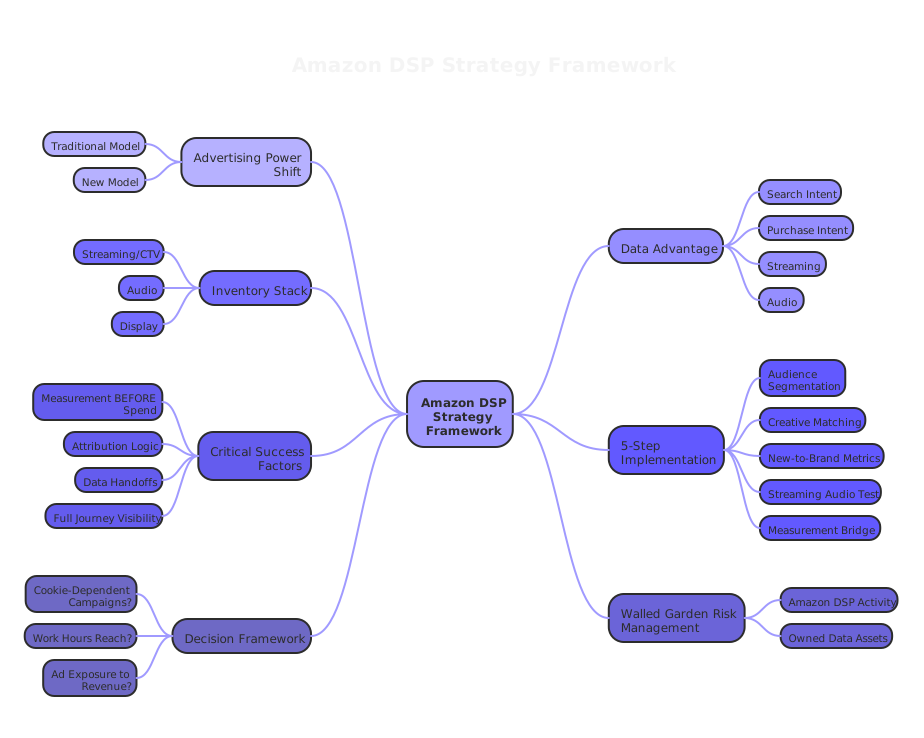
What Is Amazon DSP?
Amazon DSP is a programmatic advertising platform. It lets you buy display, video, audio, and streaming ad placements automatically, across Amazon's own properties and across a growing network of external publishers.
What separates it from other DSPs is the data underneath it. Amazon knows what people search for, what they buy, what they browse but do not buy, and what they watch. That behavioral signal, grounded in real purchase activity, is the kind of targeting most platforms can only approximate.
You are not targeting based on demographics or assumed interests. You are targeting based on what people actually do with their money.
The Quiet Rebalancing of Media Power
For the past decade, Google and Meta owned performance advertising. Google owned search intent. Meta owned social behavior. Every serious media plan started there.
Amazon is now inserting itself between those two signals.
Think about it this way. A consumer searches for "project management software" on Google. That is interest. But that same person also bought productivity books on Amazon last quarter, subscribed to a business podcast through Amazon Music, and streams finance documentaries on Prime Video. That full picture of behavior is something Google cannot see.
Amazon DSP gives brands access to that richer signal, and it deploys it across channels that are growing fast: connected TV, streaming audio, and programmatic display.
This is not Google losing. This is the ad ecosystem becoming more fragmented, which means your media strategy needs to become more intentional.
Why B2B Marketers Should Pay Attention Now
B2B marketing has historically ignored Amazon. The logic was simple: buyers are on LinkedIn, not scrolling Amazon.
That logic is aging badly.
B2B buyers are people. The same person evaluating your SaaS tool at 2pm is watching a CTV show at 8pm. They are streaming audio during their commute. Amazon DSP reaches them in those moments with targeting rooted in their full consumer identity, not just their professional role.
More importantly, cookieless targeting is no longer a future problem. It is a current one. As third-party cookies erode across browsers, brands that depend on cookie-based retargeting are losing signal. Amazon's first-party data does not have that problem. It is built on logged-in behavior and real transactions.
The brands that figure out Amazon DSP strategy now will have a measurement and targeting advantage as the rest of the industry scrambles to adapt.
What the Inventory Stack Actually Looks Like
One of the most underappreciated parts of Amazon DSP is the inventory reach. Most people associate it with Amazon.com banner ads. The real picture is broader.
Streaming and CTV inventory:
- Netflix (via Amazon's programmatic access)
- Roku placements through private marketplace deals
- Freevee, Amazon's free ad-supported streaming service
- Fire TV placements reaching millions of connected TV households
Audio inventory:
- Spotify ads through programmatic buying
- Amazon Music
- Audible pre-roll and companion ads
Display and web inventory:
- IMDb and IMDb TV
- Twitch
- Third-party publisher networks through Amazon Publisher Services
This is not one channel. It is a cross-channel system where the same first-party data thread connects your audience across formats. That thread is what makes full-funnel measurement possible in ways that disconnected platforms cannot replicate.
The Measurement Question Nobody Asks Early Enough
Here is the thing that consistently gets brands into trouble with Amazon DSP. They launch campaigns before they answer the measurement question.
What does success look like outside of Amazon's own attribution?
Amazon's reporting tools are strong within the walled garden. They show you purchase rates, detail page views, new-to-brand customers, and streaming completion rates. That data is real and valuable.
But the moment your customer journey crosses from Amazon DSP to your website, your CRM, your sales pipeline, things get complicated. If you cannot connect that programmatic exposure to downstream revenue, you are flying partially blind.
The brands that get the most from Amazon DSP implementation treat measurement as the first workstream, not the last. They define attribution logic before the first dollar is spent. They map the data handoffs between Amazon, their CDP or CRM, and their analytics stack before the campaign launches.
This is an area where House of MarTech works with teams regularly. Getting the data infrastructure right before scaling programmatic spend is what separates campaigns that generate insight from campaigns that just generate spend.
What Good Amazon DSP Strategy Actually Looks Like
There is no universal playbook here. But there are patterns that distinguish brands making it work from brands that are not.
1. Start with audience segmentation, not channel selection.
The first question is not "should we run CTV or display?" The first question is "which audience segments have the highest purchase intent right now, and where does Amazon's data confirm that?" Let the audience data drive channel selection, not the other way around.
2. Match creative format to funnel stage.
Upper funnel CTV ads should build brand familiarity. Mid-funnel display and audio ads should reinforce specific product or solution messages. Lower funnel placements, using Amazon's in-market audiences, should push toward conversion. Running the same creative across all three stages is one of the most common and most costly mistakes.
3. Use new-to-brand metrics as your north star.
Amazon DSP's new-to-brand reporting tells you how much of your revenue came from customers who had not bought from you in the past twelve months. This is one of the most honest growth metrics available in any platform. If that number is low, you are paying Amazon to retarget customers who would have come back anyway.
4. Test streaming audio before dismissing it.
Spotify and Amazon Music placements are consistently under-priced relative to their attention quality. Audio is a high-attention format. People are not multitasking with the same intensity as display. For B2B brands especially, audio ads during commute or focus hours can be a high-value, low-competition channel.
5. Build a measurement bridge early.
Connect your Amazon DSP reporting to your broader analytics environment. Whether that is through a CDP, a data warehouse, or direct API integration, the goal is to see Amazon exposure alongside all other touchpoints in a single view of the customer journey.
The Walled Garden Problem Is Real. Here Is How to Think About It.
Amazon DSP is powerful. It is also a walled garden. Amazon controls the data, the targeting logic, and the measurement reporting.
That creates dependency risk. If your entire programmatic strategy runs through one platform, you are one policy change away from a significant disruption. Amazon has changed attribution windows, reporting definitions, and audience availability before. They will again.
The answer is not to avoid Amazon DSP. The answer is to build your own data assets in parallel.
Your first-party data, your email list, your CRM, your owned audience segments, these need to grow alongside your Amazon DSP activity. The brands that thrive long-term are the ones that use Amazon's reach to acquire customers and then build direct relationships that do not depend on Amazon to maintain.
This is a media strategy question as much as a technology question. It is the kind of strategic conversation House of MarTech helps brands have before they scale spend, not after.
The Real Question for Your Business
Amazon DSP is not the right next move for every brand. But every brand should at least ask the question honestly.
Are your current programmatic campaigns dependent on third-party cookies that are disappearing? Are you reaching your buyers only during work hours on professional platforms, and missing the other 16 hours of their day? Do you have a measurement strategy that connects ad exposure to actual revenue, or do you have a reporting dashboard that tells you impressions and clicks?
Those are the real questions. Amazon DSP is one potential answer to some of them. It is not the only answer. But ignoring it because it feels like an "Amazon thing" is leaving a significant audience and data advantage on the table.
The advertising landscape is reorganizing around first-party data and authenticated identity. Amazon has both in abundance. Understanding how that fits into your broader media strategy is not optional planning for 2027. It is a practical decision for right now.
If you want to map out how Amazon DSP fits into your specific marketing stack and business model, that is a conversation worth having. House of MarTech works with brands to evaluate programmatic opportunities against their actual data infrastructure and revenue goals. No generic recommendations. Just clear thinking about what fits and what does not.
Start there.
Frequently Asked Questions
Get answers to common questions about this topic
Have more questions? We're here to help you succeed with your MarTech strategy. Get in touch
Related Articles
Need Help Implementing?
Get expert guidance on your MarTech strategy and implementation.
Get Free Audit