
GEO Optimization for MarTech Content: How to Win Visibility in AI Search and LLM Answers
Generative Engine Optimization is rewriting discoverability rules. Learn how MarTech brands can structure content to surface in AI-generated answers.


Listen to summary
0:00 audio overview
GEO Optimization for MarTech Content: How to Win Visibility in AI Search and LLM Answers
Imagine a potential customer asking ChatGPT which marketing automation platform is best for their business. ChatGPT gives a confident answer. It names three vendors. Yours is not one of them.
You rank on page one of Google. You have great reviews. You have a solid website. None of that mattered in that moment.
That is the problem GEO optimization solves. And if you are not thinking about it yet, your competitors might already be showing up where you are not.
What GEO Optimization Actually Means
GEO stands for Generative Engine Optimization. It is the practice of structuring your content so that AI systems like ChatGPT, Perplexity, and Google AI Overviews include your brand in their answers.
It is not just SEO with a new name. Traditional SEO helps you rank in a list of links. GEO optimization helps you become part of the answer itself. That is a meaningful difference.
When someone searches Google, they see a list of results and choose where to click. When someone asks an AI, they get one synthesized answer. If your brand is not woven into that answer, you are invisible. The visitor never even knows you exist.
For MarTech brands especially, this gap is growing fast. Buyers are increasingly turning to AI tools to evaluate software options, compare vendors, and understand best practices before they ever fill out a contact form.
GEO optimization for MarTech is not optional anymore. It is becoming a core part of how you get found.
Why Your Google Rankings Do Not Automatically Transfer
Here is something worth sitting with. Only about 17% of AI-cited sources overlap with Google's page one results. That means for most queries, what ranks in Google and what gets cited in AI answers are almost entirely different.
The mental model most teams operate from is this: if we rank well in Google, AI visibility will follow. That assumption is costing brands real revenue.
AI systems do not just pull from your website. They draw from the entire ecosystem they were trained on. That includes Reddit threads, industry forums, third-party publications, customer reviews, and practitioner communities. If your brand is not part of those conversations, you are invisible to AI, regardless of your domain authority.
NerdWallet is a useful example of this. Traditional banks outspend NerdWallet on SEO and advertising significantly. Yet NerdWallet consistently surfaces in AI answers about personal finance. The reason is not technical optimization. It is that NerdWallet built deep, educational content that shows up across multiple formats and contexts. AI systems recognize that breadth as authority.
That is the core principle behind GEO optimization martech strategy: authority is built through depth and distribution, not just technical SEO.
The Competitors You Have Never Heard Of
Here is something that catches most marketing teams off guard. When businesses run their first AI visibility audit, they often find competitors they have never seen in a sales cycle, an analyst report, or a trade show.
These are brands that built strategic presence in the knowledge ecosystems AI systems rely on. Community forums. Educational content hubs. Structured databases. Practitioner discussions. They may have smaller marketing budgets than you. But AI systems know them well.
This happens because AI systems learn from where real people actually talk about solving problems. If your brand is not part of those conversations, you are not part of the AI's understanding of your market.
The practical takeaway: do not assume your traditional competitive set is your AI competitive set. Run an audit. Ask ChatGPT and Perplexity the questions your buyers ask. See who is showing up. Then ask why.
What GEO Optimization Martech Implementation Actually Looks Like
GEO optimization for MarTech content is not one big project. It is a set of ongoing practices. Here is what the implementation looks like in plain terms.
Build Content Structured for AI Extraction
AI systems pull direct answers from content that is clearly organized. That means using specific headers, answering questions directly, and being concrete.
A blog post titled "Marketing Automation Best Practices" is less useful to an AI than one that answers "What should a small business look for in marketing automation software?" directly, in the opening paragraph.
Structure your content around questions your buyers actually ask. Write the answer clearly and early. Then support it with detail.
One B2B SaaS company took this approach and increased their AI citation rate from 8% to 24% in 90 days. They did not build a new team or buy new tools. They restructured existing content to directly address the specific prompts buyers were using.
Refresh Content Based on How It Is Understood, Not Just When It Was Published
AI systems do not care much about publish dates. They evaluate whether content aligns with current understanding of a topic. A three-year-old article about CRM tools might have a recent timestamp, but if the product names, pricing, and terminology are outdated, AI systems treat it as stale.
This is called semantic drift. Your content becomes misaligned with how your category is actually discussed today.
The fix is a systematic refresh schedule. Top-priority pages every 90 days. Secondary pages every six months. The goal is to track how the language in your category is changing and update accordingly. New product names, new terminology, new buyer concerns all need to be reflected.
GEO optimization martech best practices require treating content as something that needs maintenance, not just creation.
Earn Third-Party Coverage
Your own website is the weakest signal in AI search. Third-party coverage is one of the strongest.
When your research, data, or perspective gets cited by industry publications, that citation becomes part of the knowledge ecosystem AI systems draw from. One mention on your blog carries limited weight. That same insight covered by three industry publications becomes a reinforced signal.
Brands that invested in strategic media placements saw up to three times greater AI visibility compared to those relying on owned content alone.
This means original research matters more now than it ever did. Proprietary data, counterintuitive findings, and specific insights that journalists find worth covering create the kind of third-party validation that AI systems recognize as credibility.
If you are not thinking about PR as part of your GEO optimization martech strategy, you are missing one of the highest-leverage moves available.
Show Up in Community Conversations
Reddit, industry forums, and practitioner communities are not just social media extras. They are major inputs into how AI systems understand your category.
AI systems were trained on authentic human conversations. Those conversations happen in communities, not on brand websites. When your brand, your ideas, or your perspective appears repeatedly in places where real practitioners discuss real problems, that presence becomes part of how AI understands your market.
This does not mean spamming forums. It means genuinely contributing. Answering questions. Sharing specific insights. Engaging in honest discussion. Over time, that authentic presence builds the kind of community signal that AI systems reward.
Monitor What AI Is Saying About You
Most brand reputation tools are blind to what AI systems are saying about you. That is a serious gap.
AI systems sometimes generate incorrect information about brands. Wrong pricing. Fabricated features. Misattributed products. Users ask ChatGPT about your platform and get an answer that is simply wrong. They make buying decisions based on that wrong answer. Your team has no idea it is happening.
Running monthly audits of what major AI systems say about your brand is now a necessary practice. Check specific attributes: pricing, key features, company background, use cases. When you find errors, build authoritative content that directly addresses those specific points with accurate, verifiable information.
This is proactive reputation management for the AI era. It is different from responding to bad reviews. You are correcting what AI systems believe about you, not what humans have said about you.
The Authenticity Factor Nobody Talks About Enough
As AI-generated content floods the web, something interesting is happening. Authentic, human-authored content is becoming more valuable, not less.
AI systems can detect the difference between content written from lived experience and content that is a generic summary of what everyone else has already said. Human-written content earns higher click-through rates and higher engagement. More importantly, content grounded in real experience carries signals that AI systems use to identify genuine authority.
A founder explaining the actual decision-making process behind a product pivot, including what went wrong, carries more weight than a polished "best practices" article. Specificity and honesty are signals of real expertise.
This is good news for MarTech brands willing to share genuine perspective. The barrier to winning in AI search is not just technical. It is cultural. It is about whether you are willing to produce content that is genuinely useful and honest, not just optimized.
Brands like Patagonia and Garmin dominate AI citations in their categories not because of SEO tactics, but because they became inseparable from how people talk about those categories. That is the goal.
The Window Is Narrowing
AI citation patterns are consolidating. A small number of sources are being cited disproportionately. When changes happen in those patterns, they tend to be sudden and complete, not gradual.
Brands that have not yet built presence in their category's knowledge ecosystem are facing a growing disadvantage. The cost of building that presence increases as the ecosystem solidifies around existing authorities.
The time to start is not when you have a full GEO strategy mapped out. It is now, with whatever you can act on this week.
Start by auditing what AI systems say about your brand and your category. Identify the community platforms where your buyers actually discuss problems. Find the third-party publications that AI systems cite when answering questions in your space. Then build a plan to show up in all of those places consistently.
What This Means for Your MarTech Strategy
GEO optimization martech implementation does not require a dedicated team or a new tech stack. It requires a shift in how you think about where authority comes from.
Traditional marketing optimized for algorithms. GEO optimization builds genuine authority in the knowledge ecosystems that AI systems rely on.
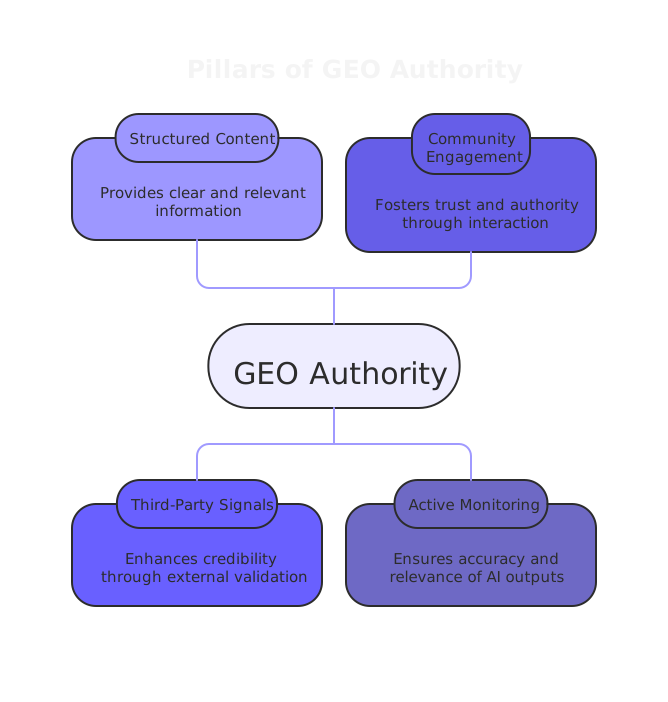
That means content structured for direct answers. Regular semantic refreshes. Earned media as a core channel. Authentic community participation. Proactive monitoring of AI outputs. And honest, specific content that reflects real expertise.
If you are unsure where your brand currently stands in AI search, that is the right place to start. A simple audit across ChatGPT, Perplexity, and Google AI Overviews for the questions your buyers ask will show you the gap quickly.
At House of MarTech, we help teams understand where they stand in AI search and build content strategies that create durable visibility. Not through chasing every possible query variation, but through building the kind of authority that AI systems recognize and trust.
The brands that will win AI visibility are not the best optimizers. They are the clearest thinkers, the most authentic voices, and the most genuinely helpful sources in their category. That is a bar worth building toward.
Related Articles
Need Help Implementing?
Get expert guidance on your MarTech strategy and implementation.
Get Free Audit