
First-Party Data Strategy: Beyond the Tool Trap
Stop collecting data you don't need. Strategic first-party data frameworks that connect to revenue, not just metrics.


Most businesses don't have a data problem. They have a data purpose problem.
You bought the CDP. You set up the tracking. You have dashboards full of numbers. But when someone asks, "What are we actually doing with all this data?", the room goes quiet.
That's the tool trap. And more businesses are stuck in it than will admit.
This post is about getting out. Not by adding more tools. By building a first-party data strategy that connects to real decisions, real revenue, and real customer relationships.
What Is First-Party Data, Really?
First-party data is information your customers give you directly. It comes from your website, your app, your emails, your purchases, your support tickets, your surveys.
It's yours. You collected it. Your customers consented to it. No middlemen.
That's what makes it valuable. Not the volume. The directness.
Third-party data borrowed trust. First-party data earns it. That's a fundamentally different starting point, and it changes how you build everything downstream.
The Real Reason First-Party Data Strategies Fail
Here's the pattern we see often at House of MarTech: a business invests in data infrastructure, collects a lot of it, and then… uses it the same way they used third-party data. Targeting. Retargeting. Segmenting by demographics.
The tool changed. The thinking didn't.
First-party data is not just a privacy-compliant replacement for third-party cookies. It's a different kind of asset. It tells you what your customers actually do, not what an algorithm infers about them.
When you treat it like a targeting list, you're leaving the most valuable parts untouched.
The most useful first-party signals are behavioral. What someone clicked. What they ignored. How long they stayed. What they bought twice. What they returned. Those patterns are where the strategy lives.
What a Real First-Party Data Strategy Looks Like
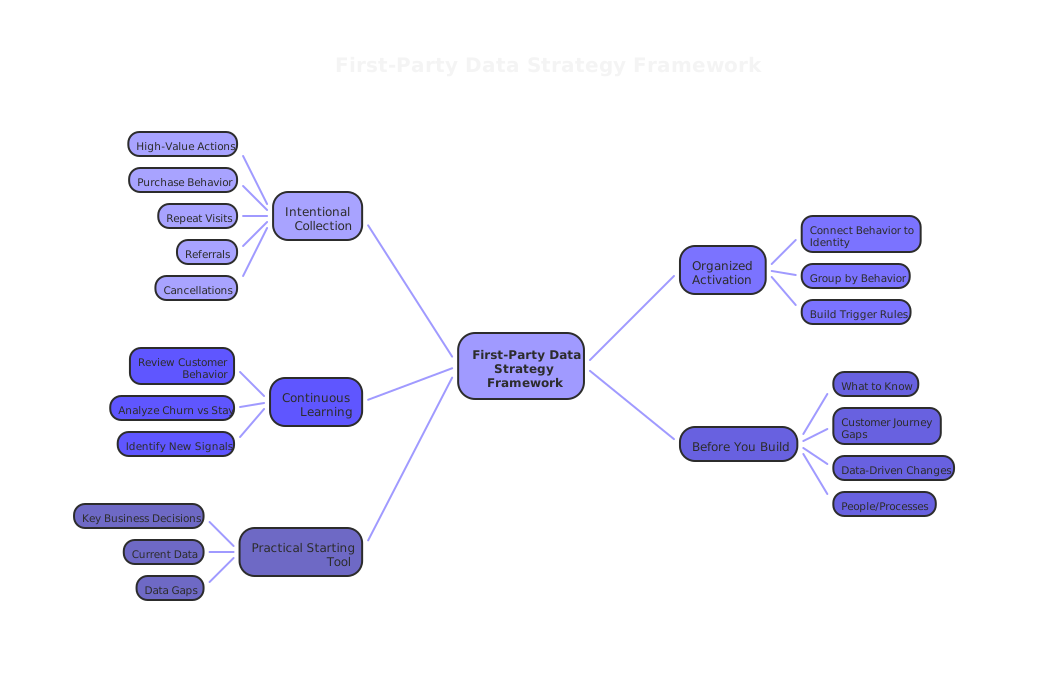
A strong first-party data strategy has three parts. They're not stages. They run together.
1. Intentional Collection
You don't need all the data. You need the right data.
Before you add another tracking event or another form field, ask one question: What decision will this data help us make?
If you can't answer that clearly, don't collect it. Data without a decision attached to it is just storage cost and compliance risk.
Start with your highest-value customer actions. A purchase. A repeat visit. A referral. A cancellation. Map the data points that surround those moments. Collect those first.
This is not about being minimal for the sake of it. It's about being intentional. Your customers will give you more data over time if they trust you. Trust is built when the data exchange feels fair to them.
2. Organized Activation
Collection is not strategy. What you do with the data is strategy.
Raw first-party data needs structure before it becomes useful. That means:
- Connecting behavioral data to identity (who did what, not just what happened)
- Grouping customers by actual behavior, not just demographics
- Building simple rules that trigger the right message or action at the right time
A concrete example: a SaaS company noticed that customers who used a specific feature in the first seven days had dramatically higher retention at 90 days. That was a first-party behavioral signal sitting in their product analytics. Once they identified it, they built an onboarding sequence specifically designed to drive early feature adoption. Retention improved. No new tool required. Just better use of data they already had.
That's what organized activation looks like. It's not glamorous. It works.
3. Continuous Learning
First-party data is not a one-time setup. It's a feedback loop.
Your customers change. Their behavior changes. The signals that mattered last year may not matter this year. The best first-party data strategies build in regular review cycles.
What changed in our top customers' behavior this quarter? What's different about customers who churned versus those who stayed? What new signals are we seeing that we didn't expect?
These questions keep your strategy current. They also prevent the slow drift where your personalization becomes stale and your customers notice.
The Questions You Need to Answer Before You Build
A first-party data strategy is only as good as the questions it's built to answer. Before you invest in infrastructure or tooling, get clear on these:
What do we actually want to know about our customers?
Not what you could know. What you need to know to serve them better and grow the business.
Where in the customer journey are we flying blind?
Every business has gaps. A clear map of what you know, what you don't know, and where the gaps hurt you most is the most useful starting point.
What would we do differently if we had better data?
This question is a forcing function. If the answer is "not much," your data problem is actually a strategy problem.
Do we have the people and processes to use this data?
Tools don't use data. People do. If you don't have someone responsible for turning data into decisions, more data won't help.
How to Build First-Party Data Collection That Customers Trust
Privacy is not just a legal requirement. It's a competitive advantage when you do it right.
Customers are more aware of data collection than ever. They notice vague consent language. They notice when a brand clearly doesn't understand them despite collecting their data for years. They notice when personalization feels intrusive versus genuinely helpful.
Here's what builds trust in data collection:
- Be specific about what you collect and why. Vague privacy policies signal that you haven't thought it through. Clear, plain-language explanations signal that you have.
- Make the value exchange obvious. If you're asking for an email address, make it clear what they're getting in return. If you're asking for behavioral data through your app, make the product better with it.
- Give customers control. Preference centers and easy opt-outs are not threats to your data strategy. They're signals of which customers actually want to hear from you. That's a better list.
A first-party data strategy built on genuine consent performs better over time. You're building with customers who chose to be there.
What to Do With Data You Already Have
Most businesses underestimate what they already have.
Before you build anything new, audit what exists:
- CRM records: purchase history, support interactions, contact data
- Email engagement: opens, clicks, unsubscribes, specific links clicked
- Website behavior: pages visited, time on site, forms submitted
- Product or service usage: features used, frequency, drop-off points
- Transaction data: average order value, purchase frequency, categories
Map what you have against the decisions you need to make. In most cases, there's more signal in existing data than businesses realize. The gap isn't data volume. It's data activation.
At House of MarTech, when we do data audits for clients, this is consistently the finding. The data infrastructure is already there. The connection between data and decision-making is what's missing.
First-Party Data and Personalization: The Right Relationship
Personalization built on first-party data works better than personalization built on inferred third-party profiles. That's not a close comparison.
But there's a version of personalization that still misses the point.
Showing someone a product they already bought is not personalization. It's a failure to use the data you have. Sending a re-engagement email to someone who unsubscribed three times is not personalization. It's ignoring clear signals.
Real personalization means responding to what your customers actually tell you through their behavior. It means knowing when to reach out and when to stay quiet. It means the experience feeling relevant, not surveillance-like.
The standard for good personalization is simple: does this feel like the brand knows me, or does it feel like the brand is watching me? First-party data, used well, creates the first feeling. Used carelessly, it creates the second.
A Practical Starting Point: The Data-to-Decision Map
If you want one thing to take from this post, make it this.
Before you touch a tool, a vendor, or a budget, build a simple map. On one side, list the three to five most important business decisions you make regularly. Pricing, targeting, retention, product development, channel investment. Whatever moves the needle for you.
On the other side, list the data you currently have.
Draw a line between each decision and the data that should inform it.
Where you can't draw a line, you have a data gap. Where you have data but no line to a decision, you have a collection habit with no purpose.
That map tells you exactly what to build, what to stop collecting, and what decisions need better data underneath them.
It takes an hour. It's more useful than most data strategy documents we've seen.
Frequently Asked Questions About First-Party Data Strategies
What's the difference between first-party and zero-party data?
First-party data is collected through observed behavior. Zero-party data is what customers actively and intentionally share with you, like survey responses, preferences, or stated interests. Both are valuable. Zero-party data tends to be more explicit. First-party behavioral data tends to be more predictive.
Do I need a CDP to have a first-party data strategy?
No. A customer data platform can help at scale, but the strategy comes before the tool. Many businesses run effective first-party data strategies using a CRM, an email platform, and clear internal processes. The question is whether your tools can execute the strategy you have, not whether you have the most sophisticated tools available.
How does first-party data strategy change with privacy regulations?
Regulations like GDPR and CCPA actually make first-party data more important, not less. They restrict how third-party data can be used and require clear consent. A first-party strategy built on explicit consent and genuine value exchange is already aligned with where regulation is heading.
How often should we review our first-party data strategy?
At minimum, once per quarter for tactical adjustments. Once per year for a full strategic review. Customer behavior shifts. Your data strategy should shift with it.
Where to Go From Here
Building a first-party data strategy is not a one-time project. It's an ongoing discipline.
The good news: you don't need to do everything at once. Start with the data-to-decision map. Identify your highest-value behavioral signals. Connect those signals to one specific action or campaign. Measure what happens.
That's enough to start. Most businesses that struggle with first-party data try to solve everything at once and end up solving nothing.
If you want a clearer picture of where your current data strategy has gaps, or help connecting your data to the decisions that drive growth, that's exactly the kind of work we do at House of MarTech. No pressure to overhaul everything. Just clarity on what to build first and why.
The data you need is closer than you think. The strategy is what unlocks it.
Related Articles
Need Help Implementing?
Get expert guidance on your MarTech strategy and implementation.
Get Free Audit