
Google AI Mode SEO: The Contrarian Guide
Everyone is chasing Google AI Mode with the same old playbook. Here is what they are missing, and what actually builds lasting visibility when AI answers the question before anyone clicks.


TL;DR
Quick Summary
Listen to summary
0:00 audio overview
Quick Answer
Here is what most SEO advice about Google AI Mode gets wrong.
It tells you to optimize harder. Stuff more structure into your schema. Write longer answers. Chase the citation. The assumption underneath all of it is this: the game is the same, just with a new interface.
It is not.
Google AI Mode does not rank pages. It synthesizes answers. That distinction should change everything about your strategy. But most businesses are still treating it like a keyword problem with extra steps.
This guide takes the opposite view.
What Google AI Mode Actually Does
Google AI Mode is a conversational search experience built on Google's Gemini models. Instead of returning a list of links, it builds a response from multiple sources, then cites them. It handles follow-up questions. It reasons across a topic instead of matching keywords to documents.
The result: users get answers without clicking. Brands that get cited become part of the answer. Brands that do not become invisible, no matter how well their pages rank in traditional results.
This is the core shift. Search used to be about winning a position. Now it is about being a trusted source the model reaches for when it needs to explain something.
Understanding this changes what you should build.
The Consensus Playbook (And Why It Falls Short)
Open any major SEO publication right now and you will find roughly the same advice for Google AI Mode SEO:
- Add more structured data and schema markup
- Write FAQ sections with direct question-answer pairs
- Increase content depth and word count
- Optimize for E-E-A-T signals
- Target long-tail conversational queries
None of that is wrong. Some of it helps. But it is also exactly what every competitor is doing. When everyone runs the same play, no one wins the edge.
There is a deeper problem. These tactics focus on making your existing content more machine-readable. They do not address whether your content is genuinely worth citing. AI models are not fooled by structure alone. They surface sources that demonstrate real knowledge, consistency across a topic, and credibility signals from other authoritative places on the web.
Optimizing your FAQ section is a tactic. Building a brand that AI systems recognize as a reliable voice in your category is a strategy. Most businesses are spending all their energy on the tactic.
The Contrarian Insight: AI Cites Brands, Not Pages
Here is the shift that changes the whole picture.
Traditional SEO optimizes individual pages to rank for specific queries. Google AI Mode SEO, done right, optimizes your brand to be recognized as a credible source across an entire topic area.
Think about what happens when someone asks Google AI Mode a question about marketing automation. The model does not pull a single page. It synthesizes from multiple sources it has learned to associate with expertise in that space. The brands that appear are not always the ones with the most optimized pages. They are the ones with the most consistent, credible presence across the web.
That means citations in trade publications. Mentions in forums where real practitioners talk. Quotes from your team in industry conversations. Podcast appearances. Collaborative content with others who already have authority. Original research that others reference.
This is not link building in the old sense. It is reputation building in the model's training data and real-time retrieval layer.
One useful reference point: the team at Digital Bloom published visibility research in early 2026 showing that AI citation position correlates with revenue outcomes more directly than traditional rank position. The brands that show up in AI answers are building a new kind of search moat, one that is much harder to replicate with technical tricks alone.
What to Build Instead of What to Optimize
Topical Authority Over Keyword Coverage
Stop thinking about which keywords to target. Start thinking about which questions your brand should own completely.
Pick a narrow topic where you have genuine expertise. Publish consistently on every dimension of that topic. Answer beginner questions. Go deep on advanced ones. Cover the edge cases. Create the resource that a practitioner would bookmark, not just the article that ranks for a query.
This is what topical authority means in practice. And it is what AI models recognize when they decide which sources to pull from. The model has seen your content before. It has seen others reference it. It trusts you on this topic.
Broad keyword coverage built on thin content is the opposite of this. It signals volume, not depth. AI systems are getting better at telling the difference.
Cited Expertise Over Structured Data
Schema markup is useful. It helps search systems parse your content. But it is table stakes, not a differentiator.
What actually earns citations is demonstrated expertise that other credible sources validate. When a journalist quotes your founder. When a practitioner on a forum links to your explainer. When an industry analyst mentions your research. These signals tell the model that real humans with real knowledge find your content worth referencing.
This is the mechanism behind E-E-A-T, the experience, expertise, authoritativeness, and trustworthiness framework Google has formalized. It is not a checklist you fill out. It is a reputation you build.
For business owners, that means investing in things that feel slow. Original research. Founder-authored content that reflects real experience. Community participation where your category lives. These build the signal. The citations follow.
Measurement That Matches the New Reality
Most marketing dashboards are not built for AI Mode. They track clicks, sessions, and rankings. But if AI Mode answers a question and the user never clicks, your analytics show nothing. Your brand still influenced that moment. You just cannot see it.
This is a real measurement gap, and it requires new thinking.
Start tracking brand search volume. When someone sees your brand cited in an AI response and searches for you directly, that shows up as branded search. It is an imperfect proxy, but it is a real signal.
Track mentions across the web, not just backlinks. Tools that monitor unlinked brand mentions give you a picture of how often your name appears in conversations that AI systems can read.
Watch for direct traffic increases that do not correlate with campaigns. That is often AI-influenced awareness converting to direct visits.
At House of MarTech, when we work with clients on content and measurement strategy, this gap between AI visibility and traditional analytics is one of the first things we address. You cannot optimize what you cannot see. Building the right measurement layer is not optional anymore.
The Zero-Click Reality and What It Means for You
Bain published research in late 2025 confirming what most marketers already felt: zero-click search is becoming the norm, not the exception. AI Mode accelerates that trend significantly.
If clicks are declining, the value of a ranking changes. Traffic is no longer the primary reward for good content. Influence is.
That sounds abstract. Here is what it means practically.
A business that gets cited in Google AI Mode responses for questions their customers ask is building awareness at the moment of highest intent. The user is asking because they are trying to solve something. Your brand name appearing in that answer is valuable even without a click. It shapes perception. It builds familiarity. It makes the eventual decision easier.
This is a shift from search as a traffic channel to search as a reputation channel. Your content strategy needs to reflect that. The goal is not always to drive clicks. Sometimes the goal is to be the answer.
That requires different content. Not just landing pages and service descriptions. Genuine educational content that helps people understand their problem, even if they never buy from you. That content earns citations. Those citations build brand recognition. That recognition converts when the moment is right.
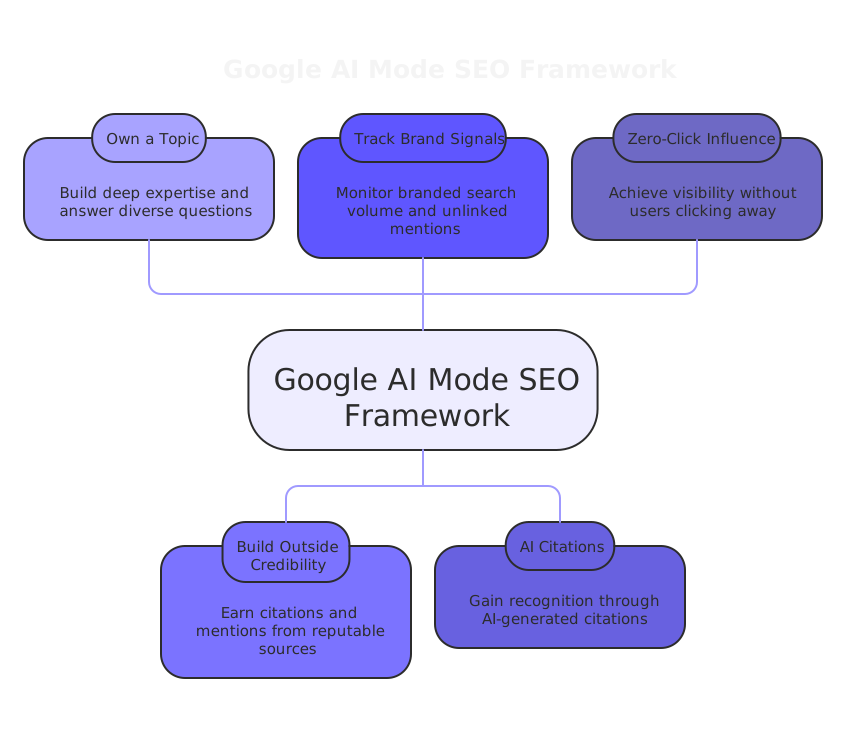
A Practical Framework for Google AI Mode SEO
You do not need a complicated system. You need clarity on three things.
1. Own a topic, not a keyword list.
Choose one area where your business has genuine, defensible expertise. Build a body of content around every angle of that topic. Update it. Deepen it. Make it the best resource available. This is your citation target.
2. Build credibility outside your own site.
Earn mentions in places the model trusts. Trade publications. Industry forums. Podcasts. Partner content. Original research that others cite. Every external signal that points back to your expertise strengthens your position in AI retrieval.
3. Measure brand signals, not just traffic.
Add branded search volume, direct traffic, and web mention tracking to your regular reporting. These are the signals that reflect AI Mode influence. Without them, you are flying blind in a channel that is growing fast.
This is not a quarterly project. It is a shift in how you think about content and visibility over time.
What Still Works (And What Does Not)
Some things have not changed. Good writing still matters. Clear answers to specific questions still get cited. Page speed and technical health still affect crawlability. Genuine expertise still outperforms manufactured content.
What does not work the way it used to: pure keyword density optimization. Thin content at scale. Exact-match anchor text strategies. Rank tracking as a primary success metric.
The businesses that will struggle are the ones treating Google AI Mode SEO as a technical checklist to complete. The ones that will build durable visibility are treating it as a reason to become genuinely more credible in their market.
That is a harder path. It is also the one that compounds.
The Real Competitive Advantage Right Now
Most businesses are waiting to see how AI Mode settles before they change their strategy. That wait is the opportunity.
The brands building topical authority now, earning citations now, and measuring brand signals now are building a position that will be very difficult to copy in twelve months. AI systems favor sources they have seen consistently. Early movers in a topic area have a structural advantage that keyword optimization alone cannot overcome.
This is not a reason to panic or overhaul everything at once. It is a reason to start shifting resources. Less effort on broad keyword volume plays. More effort on depth, credibility, and reputation signals.
If you want to think through what that shift looks like for your specific business, that is exactly the kind of work we do at House of MarTech. The strategy is not one-size-fits-all. It depends on your category, your current authority, and where your customers are actually asking questions.
Start with the question your best customer is asking right now. Make sure your brand is the most credible answer to it. Then work outward from there.
That is Google AI Mode SEO done right.
Frequently Asked Questions
Get answers to common questions about this topic
Have more questions? We're here to help you succeed with your MarTech strategy. Get in touch
Related Articles
Sales and Marketing Alignment Framework: How to Build Shared Revenue Goals and Unified Lead Handoff Processes
90% of Your Visitors Are Invisible: Why Pre-Conversion Behavior Is Your Biggest Blind Spot
The Cost of Inaction: What Fragmented Customer Data Actually Costs Your Business
Need Help Implementing?
Get expert guidance on your MarTech strategy and implementation.
Get Free Audit