
Neurotechnology in Marketing Framework
Neurotechnology in marketing unlocks subconscious consumer insights via EEG and biometrics. House of MarTech reveals gaps, ethical paths, and integration for leaders to gain edge. Projected $52B market by 2034.


TL;DR
Quick Summary
Quick Answer
Your customer says they love the ad. Their brain says something different.
That gap, between what people tell you and what they actually feel, is where most marketing budgets quietly bleed out. Surveys give you polished answers. Focus groups give you social consensus. Neither gives you what happens in the first three seconds a person sees your brand.
Neurotechnology in marketing exists to close that gap. And it is moving faster than most MarTech stacks are built to handle.
What Is Neurotechnology in Marketing?
Neurotechnology in marketing uses tools that measure brain activity and body signals to understand how consumers respond to ads, products, and brand experiences. The goal is not mind control. The goal is truth.
The core tools are:
- EEG (electroencephalography): Measures electrical brain activity in real time. Tells you when attention spikes or drops during a video ad.
- Eye tracking: Maps where people actually look on a webpage or package, not where they say they look.
- Galvanic skin response (GSR): Measures tiny changes in skin conductivity caused by emotional arousal.
- Facial coding: Reads micro-expressions to detect genuine emotional reactions frame by frame.
- fMRI: Deep brain imaging used in research settings to identify emotional memory encoding.
Together, these tools form what researchers call the neuromarketing toolkit. They measure subconscious reactions, the kind that happen before a person has time to rationalize or self-censor.
This is not a fringe concept. The neuromarketing market is on track to surpass $52 billion globally by 2034, according to industry market research. That is a signal, not a trend.
Why Self-Reported Data Is Failing You
Think about the last time you tested a landing page. You ran a survey, maybe an A/B test. Users said version B felt cleaner. Conversion rates told a different story.
That is the reporting gap in action.
Human beings are not reliable narrators of their own decisions. Research in cognitive neuroscience consistently shows that emotion drives purchase decisions far more than rational evaluation does. People buy on feeling, then justify with logic.
Self-reported data captures the justification. Neurotechnology captures the feeling.
A campaign team at a global consumer brand used EEG testing to evaluate two TV spots before broadcast. Both spots scored similarly on standard audience surveys. EEG data showed that one spot triggered significantly higher emotional engagement in the first five seconds, the window that determines whether viewers stay or tune out. They aired the second spot. It outperformed forecasts.
That is the practical value of neurotechnology in marketing: knowing before you spend.
The Integration Gap Most MarTech Teams Are Ignoring
Here is where most conversations about neuromarketing stop. They treat it as a research method, not a MarTech function.
That is the wrong frame.
Neurotechnology data belongs in your marketing stack. It should inform creative briefs, feed into audience segmentation models, and shape personalization logic. Right now, the majority of teams using neuromarketing tools keep that data siloed in a research report that gets read once and filed away.
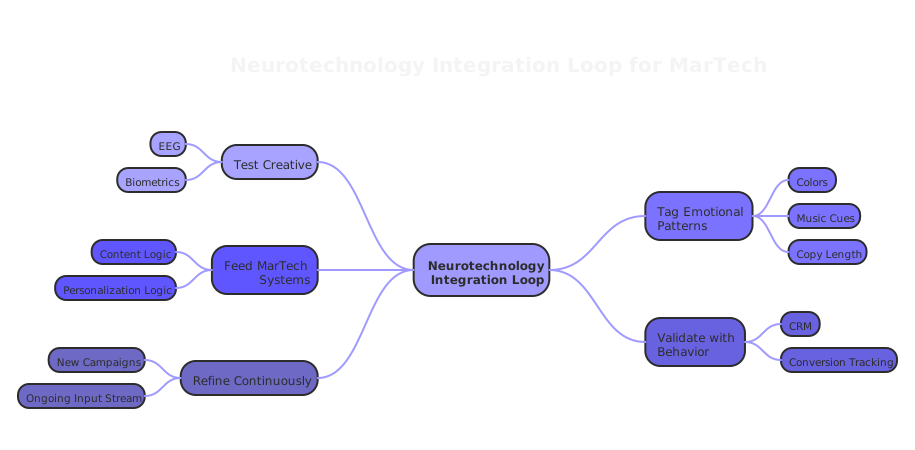
The opportunity is to build a continuous feedback loop:
- Test creative at the stimulus level using EEG and biometric tools before launch.
- Tag emotional response patterns to specific creative elements, colors, music cues, copy length.
- Feed those patterns into your content and personalization systems as decision signals.
- Validate with behavioral data from your CRM, email platform, and conversion tracking.
- Refine continuously, treating neuro data as another input stream alongside click-through rates and revenue data.
This is neurotechnology in marketing strategy as an operational system, not a one-time lab experiment.
At House of MarTech, we work with teams to map these feedback loops inside existing MarTech architectures. The question is not whether to use neurotech insights. It is how to wire them into systems that already run your campaigns.
What Neurotechnology Actually Measures (And What It Does Not)
Getting this right matters before you invest a single dollar.
What neurotech tools measure well:
- Attention: Which elements grab focus and hold it
- Emotional valence: Whether a stimulus produces positive or negative arousal
- Cognitive load: Whether your message is easy or hard to process
- Memory encoding: Whether an experience is likely to be recalled later
What they do not measure:
- Conscious intent or purchase commitment
- Cultural context and individual personal history
- Long-term brand attitude shifts from a single exposure
Neurotech data is a layer of signal, not the whole picture. The most effective neurotechnology in marketing implementation combines biometric data with behavioral analytics, qualitative research, and real-world performance metrics.
Treating EEG data as a standalone truth is as flawed as treating survey data that way.
The Ethical Layer You Cannot Skip
This is not a box to check. It is the foundation everything else rests on.
Neural data is among the most intimate information a person can share. Brain signals, skin responses, and eye movement patterns can reveal emotional states, stress levels, and subconscious associations. Several jurisdictions are already moving to regulate it.
Chile became the first country to enshrine neurorights in its constitution. Colorado, Minnesota, and California have passed or are advancing neural data privacy laws. The EU's AI Act includes provisions relevant to biometric data collection in commercial settings.
The regulatory landscape is moving. If you are building neurotechnology into your marketing practice, you need:
- Explicit informed consent from every participant, in plain language, not buried in terms of service.
- Clear data minimization policies: Collect only what you need, store it only as long as necessary.
- Transparent communication about how neural and biometric data is used.
- Third-party audits of your data handling practices.
This is not just legal compliance. It is the difference between building consumer trust and burning it.
Brands that treat neural data with the same care they treat financial data will earn permission to go deeper. Brands that treat it as just another data asset will face the regulatory and reputational consequences.
How to Evaluate Neurotech Vendors Without Getting Lost
The vendor landscape is crowded and claims are often overstated. Here is a practical filter.
Ask these four questions before signing any contract:
What is your scientific validation? Legitimate neurotech vendors can point to peer-reviewed research supporting their methodologies. If they cannot, that is a red flag.
How is participant data stored and protected? You want encryption standards, clear retention policies, and explicit answers about whether data is sold or shared.
How does your output integrate with MarTech systems? Research-only outputs that live in PDFs are not MarTech tools. You want data that can flow into your stack.
What does your consent process look like? Review the actual participant consent materials. They should be readable by a non-expert.
The neurotech market includes serious players with clinical-grade tools and startups with compelling demos built on weak science. Asking these questions early filters the field fast.
What Will Be Obvious in Two Years That Is Not Yet
Here is the pattern most marketers are missing right now.
The convergence of consumer-grade wearables, real-time AI processing, and tighter privacy regulation is going to reshape what neurotechnology in marketing means by 2027.
Right now, EEG testing happens in labs or controlled settings. In two years, lightweight headsets and next-generation smartwatch biosensors will make passive biometric feedback plausible at consumer scale, with opt-in models that give users value in exchange for sharing signal data.
At the same time, AI models trained on large neuromarketing datasets will begin generating creative recommendations based on predicted emotional response, before a human tests anything.
The brands building neuro-informed creative processes now are the ones with the institutional knowledge to work those systems when they mature. The brands waiting are building the knowledge deficit they will spend years trying to close.
A Practical Starting Point for Business Owners
You do not need a neuroscience lab to start.
Step 1: Audit your current creative testing process. Where does subconscious response currently have no data input? That is your gap.
Step 2: Identify one campaign or asset type where you consistently get unexpected performance variance. That variance often points to an emotional signal you are not capturing.
Step 3: Run a small neuromarketing pilot. Several research firms offer EEG and biometric testing for creative evaluation at a project level. Start with one creative decision, not your entire brand system.
Step 4: Build a protocol for data integration. Even if your neurotech output is a research report today, design the protocol for how that insight should eventually connect to your segmentation and personalization logic.
Step 5: Establish your ethical governance framework before you scale. Consent processes, data retention rules, and transparency standards should be defined before you are collecting data at volume, not after.
Where This Goes From Here
The brands that will own the next decade of consumer attention are the ones that understand what drives human decisions at a level their competitors cannot see.
Neurotechnology in marketing is one of the clearest paths to that understanding. It is also one of the most misunderstood, most underintegrated, and most ethically consequential investments a marketing team can make.
Getting it right requires more than buying a tool or running a study. It requires building the systems, the governance, and the institutional knowledge to turn biological signal into strategic advantage, responsibly.
If you are trying to figure out where neurotechnology fits in your existing MarTech architecture, or how to start building a subconscious insights capability without the lab coat, House of MarTech works with growth-stage and enterprise teams on exactly this kind of integration. The starting point is always the same: understanding what your current stack can and cannot see, and building toward the gaps that matter most.
The signals are already there. The question is whether your systems are built to read them.
Frequently Asked Questions
Get answers to common questions about this topic
Have more questions? We're here to help you succeed with your MarTech strategy. Get in touch
Related Articles
Need Help Implementing?
Get expert guidance on your MarTech strategy and implementation.
Get Free Audit