
Neurobranding in Marketing
Neurobranding in marketing goes deeper than logos and taglines. Here is how to build brands that work on the subconscious level, where real buying decisions happen.


Your customer already decided before they read a single word.
That sounds dramatic. It is also backed by decades of neuroscience research. By the time someone consciously evaluates your brand, their brain has already formed an emotional impression. That impression was shaped by color, sound, memory, and feeling. Not your features list. Not your pricing page.
This is why neurobranding in marketing matters. Not as a creative trend, but as a systematic approach to shaping those early, subconscious signals in your favor.
What Is Neurobranding?
Neurobranding is the application of neuroscience principles to brand strategy. It focuses on how the brain processes brand information below conscious awareness, specifically through emotion, memory, and sensory experience.
Classic branding asks: "Does this look good?" Neurobranding asks: "How does this make the brain feel, and does that feeling build trust or erode it?"
The difference is not small. Traditional brand audits measure awareness and recall. Neurobranding digs into what drives those numbers. Why do people remember one brand and forget another? Why does a particular color combination feel trustworthy? Why does a specific tone of voice feel familiar to someone who has never heard it before?
The answers live in neuroscience, not guesswork.
Why This Is a Strategy Problem, Not a Design Problem
Most businesses treat neurobranding as a visual design task. Hire a good designer, pick strong colors, write clean copy. Done.
That framing misses the point entirely.
Neurobranding in marketing is a systems problem. Every touchpoint your brand creates, from your email subject lines to your sales call tone to your checkout page layout, sends signals to the brain. Those signals either build a coherent emotional picture or they create friction. Coherence builds trust. Friction creates doubt.
The real work is not designing one beautiful asset. It is building a brand system where every element reinforces the same subconscious message.
Think about Apple. The unboxing experience is not a marketing tactic. It is a neurologically consistent signal that says: "This product respects you." The weight of the box, the sound it makes when it opens, the smell of fresh packaging. Each detail speaks to the same emotional core. No single detail does the job alone. The system does.
The Three Levers Neurobranding Actually Pulls
Most content on this topic stops at "use emotional storytelling." That is true but incomplete. There are three distinct neurological mechanisms worth understanding.
1. Emotional Memory Encoding
The brain encodes memories more strongly when emotions are present. This is why you remember your first concert but not most Tuesday afternoons.
For brands, this means experiences that trigger genuine emotion, such as delight, surprise, or even productive tension, get stored more deeply. They come back faster when a purchase decision arises. Your goal is not just awareness. It is emotionally weighted memory.
Practical implication: Map your customer journey and identify which moments have the highest emotional intensity. Those are your encoding opportunities. Invest in them disproportionately.
2. Pattern Recognition and Familiarity
The brain is a pattern machine. It relaxes around the familiar and becomes guarded around the unfamiliar. Psychologists call this the "mere exposure effect." You feel more positively toward things you have seen before, even if you do not consciously remember seeing them.
For brands, consistency is not just a style guide rule. It is a neurological trust-building mechanism. Every time your brand appears in a consistent way, you are making the brain feel safer.
Practical implication: Audit your brand for consistency across every channel. Inconsistency is not a visual problem. It is a trust problem.
3. Sensory Anchoring
The brain ties memories and emotions to sensory cues. A specific scent, a sonic logo, a tactile texture. These anchors bypass cognitive filtering and trigger emotional responses almost instantly.
This is why the Intel chime or the Netflix "ta-dum" are so effective. You hear them once and the feeling of a specific experience comes back immediately. The brand is no longer just a name. It is a felt experience.
Practical implication: Identify which sensory channels your brand owns and which ones you are ignoring. Most B2B brands, in particular, over-index on visual and completely neglect audio or spatial experience.
The Gap Most Brands Are Missing
Here is where competitor content on neurobranding tends to fall short. They explain the science reasonably well. But they rarely address two critical variables.
Cultural context. Neuroscience provides universal principles. Brains are brains. But emotional associations are not universal. Color meaning, voice tone, spatial expectations, and social trust signals all vary by culture. A brand signal that feels warm and trustworthy in one market can feel cold or even untrustworthy in another. If your brand operates across markets, your neurobranding strategy needs to account for this explicitly. One-size-fits-all neurobranding is a contradiction in terms.
Neurotype diversity. Not all brains process information the same way. People with different neurotypes, including those with ADHD, dyslexia, or autism spectrum traits, may respond very differently to the same brand stimuli. A cluttered visual environment that feels "energetic" to one person feels overwhelming to another. Designing for neurological diversity is not just ethical. It is smart market strategy. You are leaving real audience connection on the table if you ignore it.
These two gaps are exactly where a systematic approach to neurobranding in marketing creates competitive advantage.
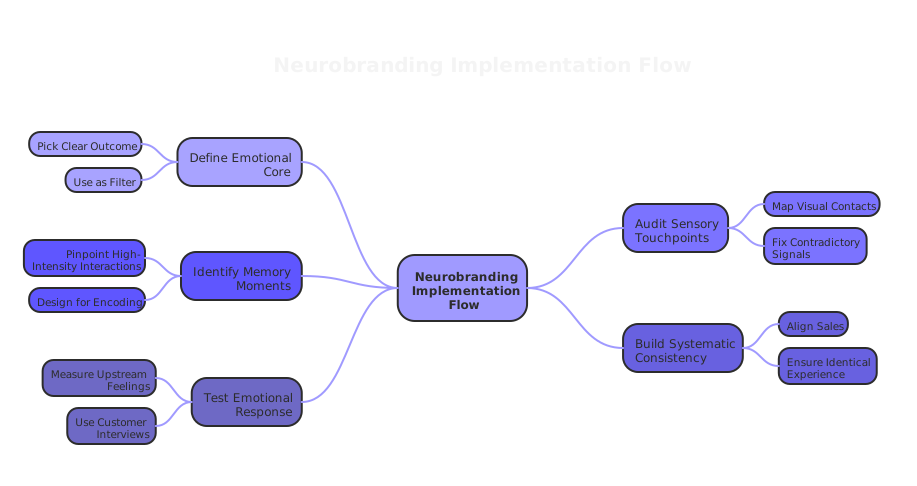
A Practical Framework for Implementation
You do not need a neuroscience lab to apply these principles. You need a structured process.
Step 1: Define Your Emotional Core
Before any tactics, answer this question: What is the single emotional state your brand should reliably create?
Not a list of adjectives. One clear emotional outcome. Confidence. Relief. Excitement. Belonging. Pick one and make it the filter for every brand decision.
Step 2: Audit Your Sensory Touchpoints
List every place your brand makes contact with a customer or prospect. Visual, audio, written, spatial, tactile where relevant. For each touchpoint, ask: does this reinforce the emotional core, or does it contradict it?
Be honest. Most audits reveal at least two or three touchpoints working against the brand's intended emotional signal.
Step 3: Identify Your Memory Moments
Which touchpoints occur at moments of high emotional intensity for the customer? Onboarding. First use. Problem resolution. Renewal. These are your encoding windows. They deserve more investment and more intentional design than the low-stakes moments in between.
Step 4: Build Consistency Systematically
Consistency is not a visual standard. It is a cross-functional operational standard. Sales, customer success, product, and marketing all create brand signals. A systematic neurobranding approach builds alignment across all of them, not just the marketing team's assets.
This is where MarTech becomes the backbone. Your CRM, email platform, and customer data infrastructure determine whether your brand shows up consistently or erratically. At House of MarTech, we help brands connect those systems so the emotional experience your brand promises is actually delivered at every touchpoint.
Step 5: Test Emotional Response, Not Just Metrics
Standard marketing metrics measure behavior. Click-through rate, conversion rate, time on page. These are downstream signals. Emotional response testing, through customer interviews, first-impression testing, or even simple sentiment analysis, gives you upstream signal. You learn why behavior is happening, not just what happened.
Neurobranding in B2B: Yes, It Matters Here Too
B2B marketing has a bias toward the rational. Features, case studies, ROI calculators. The assumption is that business buyers make logical decisions.
They do not. Business buyers are humans with brains. Their subconscious evaluations happen just as fast as any consumer's. The difference is that B2B purchase cycles are longer, which means there are more touchpoints. More opportunities to either reinforce the emotional signal or undermine it.
B2B brands that apply neurobranding principles tend to feel different from their competitors in ways buyers struggle to articulate. They just feel more trustworthy. More credible. More like the right choice. That "feeling" is not magic. It is the result of a consistently designed emotional experience across a long, complex journey.
If your brand strategy only addresses what you say, not how you make people feel across every stage of the buying journey, you are working with an incomplete system.
What Ethical Neurobranding Looks Like
Neuroscience applied to marketing raises real ethical questions. You are, by definition, trying to influence decisions below conscious awareness. That deserves direct acknowledgment.
The ethical line is not whether you use these principles. Every brand, intentionally or not, creates subconscious signals. The line is whether you are creating genuine emotional value or manufacturing false impressions.
Ethical neurobranding aligns the emotional experience you create with the actual experience of using your product. If your brand feels trustworthy but your product disappoints, you have not used neurobranding well. You have just made the gap between expectation and reality more painful.
The brands that build lasting value use neurobranding to surface real strengths, not to disguise weaknesses.
Frequently Asked Questions
What is neurobranding in marketing?
Neurobranding in marketing is the use of neuroscience principles to design brand experiences that influence subconscious perception. It focuses on emotion, memory, and sensory response rather than conscious reasoning alone.
Is neurobranding only for large brands with big budgets?
No. The principles apply at any scale. A small business can apply emotional consistency, sensory anchoring, and memory moment design with limited budget. The investment is in strategic clarity, not expensive production.
How is neurobranding different from traditional branding?
Traditional branding focuses on visual identity and messaging. Neurobranding addresses the neurological mechanisms behind how brand perceptions form, including emotional memory, pattern recognition, and sensory association.
Can neurobranding work in digital marketing?
Yes. Digital environments are rich with sensory cues, including motion, sound, layout, and color. Email, landing pages, social content, and product interfaces all carry neurological signals that can be designed intentionally.
Where to Go From Here
Neurobranding in marketing is not about tricks. It is about understanding how your customers' brains actually work and building a brand system that respects that reality.
Start with one question: What emotion does your brand reliably create right now? Not what you intend. What it actually creates. Talk to customers. Run first-impression tests. Read the language in your reviews.
Then decide whether that emotion is the one you want to build on.
If you want a structured assessment of how your brand experience measures up across channels, including whether your MarTech stack supports or undermines your brand signals, that is exactly the kind of work we do at House of MarTech. The starting point is always a clear picture of what you have before deciding what to build.
Your customers are making subconscious decisions about your brand right now. You can shape those decisions, or leave them to chance.
Related Articles
Need Help Implementing?
Get expert guidance on your MarTech strategy and implementation.
Get Free Audit